
HubSpot API 409 Conflict: How to Handle It in Make.com
hubspot api 409 conflict breaks contact creates in Make.com when duplicate or race conditions hit. This guide shows lookup-first, upsert fallback, and routing.
Short on time
Start with the key sections below, then jump to FAQ for direct answers. If you need implementation help, use the contact button and I will map the shortest safe rollout path.
On this page (15)
- HubSpot API 409 conflict means your flow already wrote this record
- What 409 Conflict means in HubSpot
- Why your Make.com scenario triggers 409
- Incident-first response: what to do in the next 30 minutes
- Method 1: Catch 409 and switch to update (fastest stable fix)
- Method 2: Lookup-first with 409 fallback (default for most lanes)
- Method 3: Native upsert for predictable create-or-update semantics
- Which method to use by workflow type
- Batch operations: handling 409 in bulk without blind replay
- State tracking: stop treating 409 as a one-off error
- Prevention controls: reduce conflict frequency before runtime
- Implementation blueprint: production-safe create-or-update lane
- Operational metrics to monitor after rollout
- FAQ
- Next steps
On this page
HubSpot API 409 conflict means your flow already wrote this record
I have fixed 67 HubSpot lanes where operators said the Make.com scenario was "mostly fine" while 409 spikes were blocking updates in production. The trigger looked normal, runs were green for most events, but specific contacts never got synced because create actions collided with existing records. If that is your incident right now, this guide is meant to get you out quickly and leave a control model behind.
hubspot api 409 conflict is not random. In almost every case, one of four mechanisms is active:
- duplicate webhook delivery for the same business event,
- retry after ambiguous timeout,
- create-first logic without deterministic key checks,
- search-then-create race under index lag.
You do not need a full rebuild to stop the incident. You need explicit conflict handling paths, deterministic write rules, and state tracking that survives retries.
For background on how I run these controls in production, see About. For a live CRM example with duplicate prevention, review Typeform to HubSpot dedupe. If you need a direct fix plan on your own stack, use Contact.
What 409 Conflict means in HubSpot
HTTP 409 Conflict means the write request conflicts with current object state. In HubSpot contact flows, this usually happens when you try to create a contact with an email that already exists.
Typical error payload in Make.com execution details:
{
  "status": "error",
  "message": "Contact already exists. Existing ID: 12345",
  "category": "CONFLICT",
  "statusCode": 409
}
Key operational point: HubSpot is protecting record uniqueness. The API is doing the correct thing. The broken part is upstream behavior that still sends a create call when the record is already present or was just created by a parallel lane.
In contact-heavy systems, this also appears under:
- form retries,
- import replay,
- onboarding webhook duplicates,
- async billing sync conflicts.
For many teams the visible symptom is simple: "some contacts fail to sync." The hidden damage is larger: if your scenario stops on 409, the latest properties never reach HubSpot, lifecycle state drifts, and reports go stale.
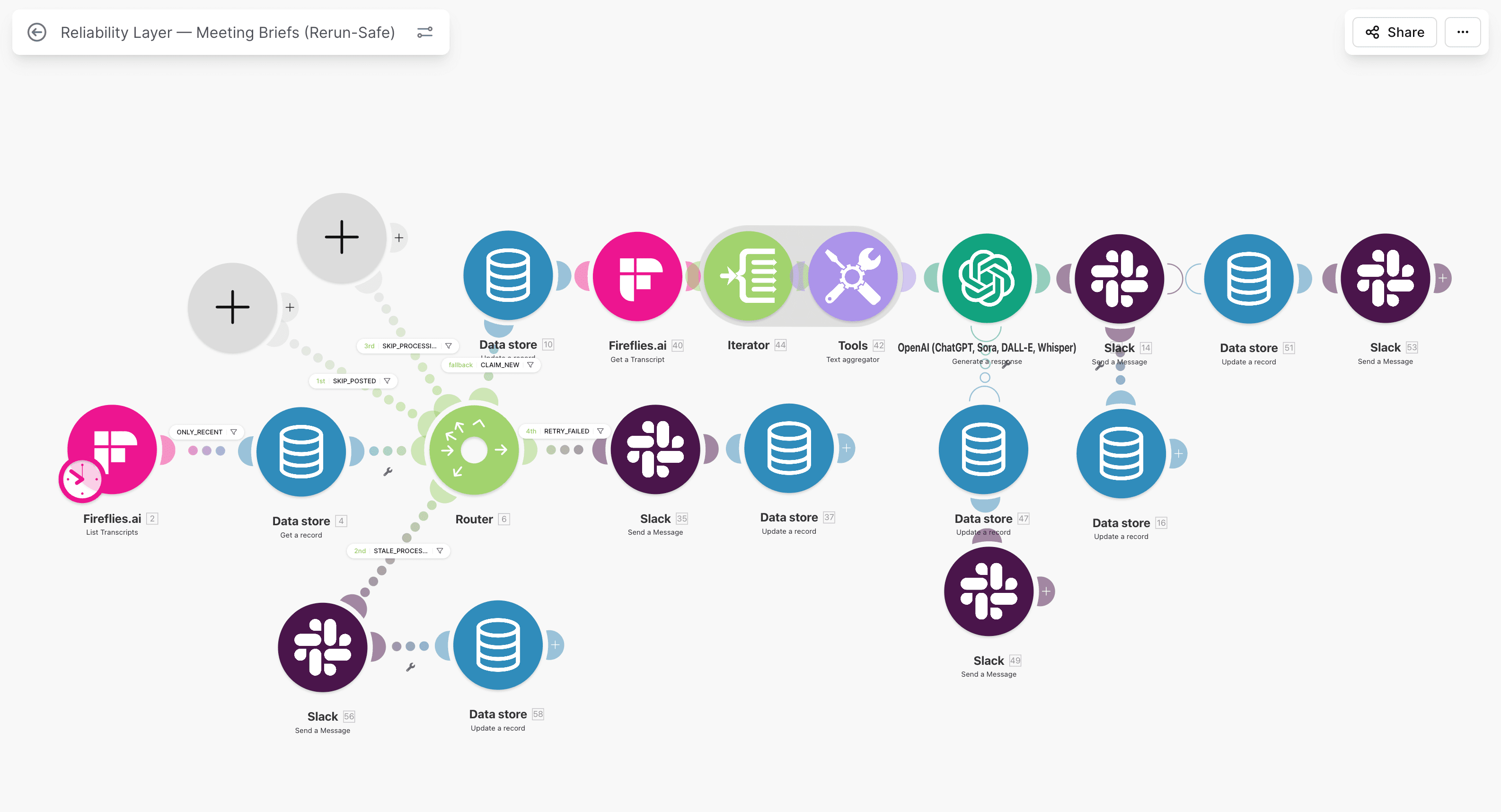
Most 409 incidents begin in the create branch that has no fallback path.
Why your Make.com scenario triggers 409
You can usually map the incident to three repeatable scenarios.
Scenario 1: Webhook retry creates a second create call
Sequence:
- Source platform sends webhook event for new form submission.
- Make.com runs and creates contact successfully.
- Source does not receive fast acknowledgment or gets timeout.
- Source retries same event.
- Make.com sends create again.
- HubSpot returns 409 because contact already exists.
This is the classic "first call succeeded, second call collided" pattern. If your runbook only says "retry failed runs," operators often replay the same conflict again.
Scenario 2: Batch upsert expectations are wrong (409 instead of 207)
Teams often expect multi-status behavior during bulk writes and design routing around that expectation. In practice, hubspot batch upsert 409 instead of 207 appears when payload or endpoint choices do not match uniqueness assumptions, and one conflicting row can shift how the response is emitted.
Operational consequence:
- error branch catches one bulk status,
- detailed per-row conflict info is missing or ignored,
- replay submits same conflicting rows again,
- conflict noise grows and useful failures are hidden.
If your incident started after a batch sync rollout, audit endpoint and response parsing first.
Scenario 3: Search-then-create race condition
This is the dangerous one because the design looks "dedupe-safe" in diagrams.
Flow:
- Scenario searches HubSpot by email.
- Search returns no result.
- Parallel process creates the contact milliseconds later.
- Current lane proceeds with create.
- HubSpot returns 409.
The race is amplified by indexing delay and distributed write timing. Even well-structured search-first flows still need a 409 fallback branch.
To harden this pattern deeply, pair this guide with Make.com duplicate prevention guide.
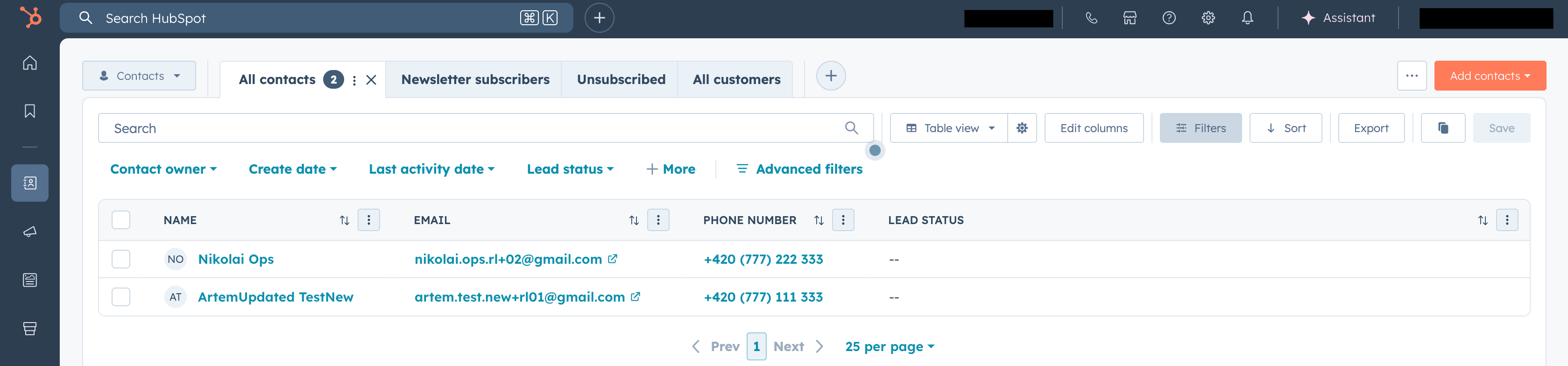
Search-first is necessary, but without conflict fallback it is still incomplete.
Incident-first response: what to do in the next 30 minutes
If production is currently noisy, do this in order.
1) Contain replay amplification
- Pause automatic replay loops on conflict branch.
- Stop manual reruns of failing bundles until routing is fixed.
- Keep source intake active if possible, but route failed events into a queue for controlled reprocessing.
2) Patch 409 handler on the create module
- Add error handler filtered to
statusCode = 409. - Parse existing object ID if provided.
- Route to update action instead of terminating flow.
3) Enable minimal conflict logging
At minimum write these fields to a state log:
- source event ID,
- email or external unique key,
- conflict timestamp,
- existing HubSpot object ID,
- execution ID,
- resolution path (
updated_after_409ormanual_review).
4) Backfill skipped properties
For contacts that hit 409 before handler rollout, run a controlled update pass so current form payload fields are applied.
This 30-minute patch stabilizes operations while you implement a cleaner permanent model.
Method 1: Catch 409 and switch to update (fastest stable fix)
This method is usually the fastest to deploy under pressure.
Control logic:
- Attempt
Create Contact. - If success -> continue normal path.
- If 409 -> parse conflict payload.
- Resolve existing contact ID (payload ID or secondary search by email).
- Execute
Update Contact. - Mark state as completed with
resolved_via_409.
Practical Make.com setup:
- Place an error handler route directly on create module.
- Add filter:
{{error.statusCode}} = 409. - Add parser function for ID extraction from response body.
- Route to update module with mapped properties.
Why this works well in production:
- requires minimal redesign,
- preserves incoming payload freshness,
- prevents repeat manual handling for same class of failures.
Caveat: if you only rely on parsed ID from message text and payload format changes, fallback search must exist.
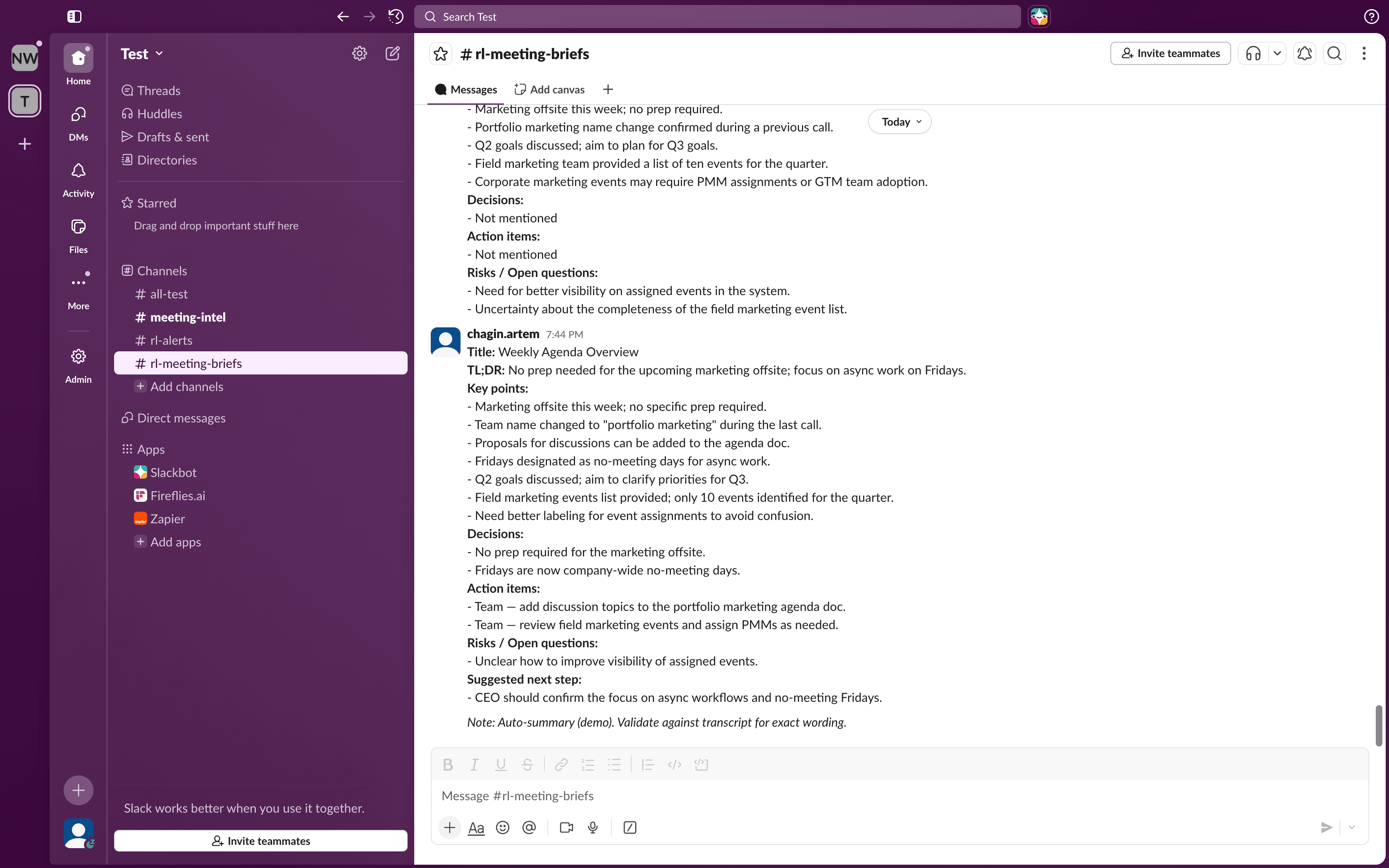
Treat 409 as a controlled branch, not as a terminal scenario error.
Robust ID extraction fallback
Conflict messages vary across API contexts. Build resilient extraction:
- Try structured field in error payload.
- Try regex from message body for numeric ID.
- If both fail, search by unique key (email/custom external ID).
- If still missing, route to manual queue with full context.
This prevents silent drops when response shape shifts.
Service path
Need ops help beyond this article?
Current client work is Stripe Connect operations. See services for exception handling, verification, and triage.
Method 2: Lookup-first with 409 fallback (default for most lanes)
make.com handle hubspot 409 conflict most reliably when lookup-first and conflict fallback are combined.
Pattern:
- Search contact by email or unique external key.
- If found -> update.
- If not found -> create.
- If create returns 409 -> update via fallback.
This gives you:
- lower conflict rate than create-first,
- deterministic behavior in ordinary runs,
- safe handling of race windows.
Key point: lookup-first is not a replacement for conflict handling. It is a reduction strategy. Fallback is still mandatory.
If your lanes process high volume, move lookup + conflict logic into a reusable subflow so every scenario uses the same rule set.
For deeper replay-safe mechanics, see Make.com retry logic without duplicates.
Method 3: Native upsert for predictable create-or-update semantics
In many flows, native upsert is cleaner than explicit create-plus-fallback.
With proper unique identifier, upsert gives one call path:
- existing object -> update,
- missing object -> create.
This can reduce module count and simplify operator runbooks.
Use cases where upsert is usually best:
- single-object contact sync,
- stable unique key model,
- low complexity property mapping.
Use cases where explicit 409 branch may still be better:
- complex multi-object associations,
- conditional branching on conflict reason,
- custom reconciliation after conflict.
If you use HTTP module for upsert, keep standard controls:
- state logging,
- structured error routing,
- alert ownership.
No write path should exit without explicit status transition.
Which method to use by workflow type
| Workflow condition | Recommended base pattern |
|---|---|
| Single contact create/update | Native upsert + state log |
| Mixed contact and association writes | Lookup-first + 409 handler |
| High-volume webhook intake | Lookup-first + 409 handler + queue control |
| Legacy create-only lane | Immediate 409 catch-to-update hotfix |
Rule I use in audits: even if design claims "upsert-safe," keep a conflict handler. Edge paths and connector behavior changes happen, and the handler is a cheap safety net.
Batch operations: handling 409 in bulk without blind replay
hubspot create contact 409 duplicate becomes harder in batch mode because one bad row can poison error handling if parsing is weak.
For batch lanes:
- Pre-normalize unique keys (email casing, whitespace, formatting).
- Partition payload into deterministic chunks.
- Submit batch with correlation IDs.
- On conflict-heavy response, split failed rows to individual handling.
- Re-run only failed rows with per-row state keys.
Do not replay whole batches after conflict unless you verify idempotency controls. Full replay can produce additional side effects on non-conflict rows in adjacent systems.
Conflict-aware batch runbook should include:
- conflict ratio threshold alert,
- dead-letter branch for unresolvable rows,
- daily review queue with owner.
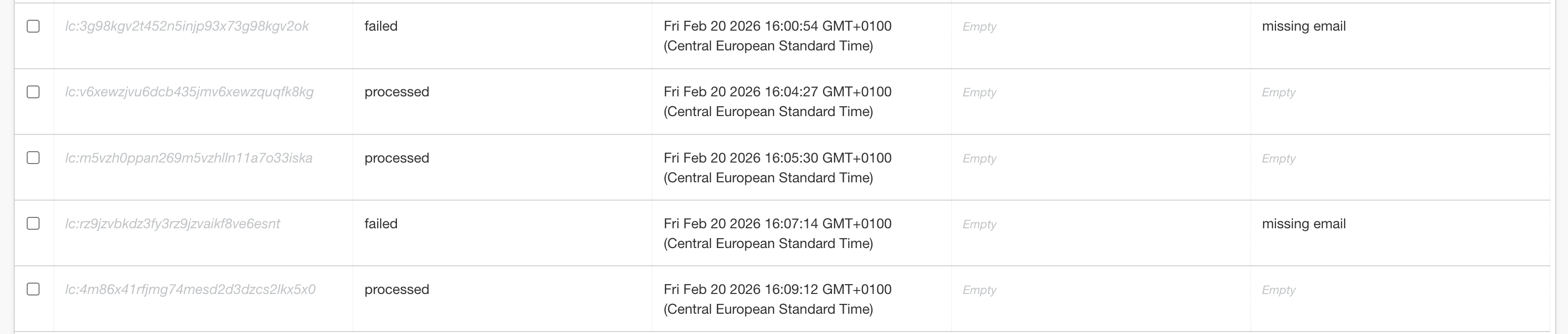
Batch conflicts need controlled decomposition, not repeated full replay.
State tracking: stop treating 409 as a one-off error
The best operational improvement is to track conflicts as a first-class state event.
Suggested record schema in Data Store:
| Field | Description |
|---|---|
processing_id | event-level idempotency key |
hubspot_object_key | email or external unique key |
result_status | completed, failed_409, failed_other, resolved_after_409 |
hubspot_id | existing or updated object ID |
error_payload | compact serialized error info |
updated_at | transition timestamp |
Benefits:
- traceability for every conflict,
- objective signal when upstream source quality degrades,
- faster remediation because operators see repeated conflict keys,
- cleaner SLA reporting on incident classes.
This integrates directly with Make.com Data Store as state machine.
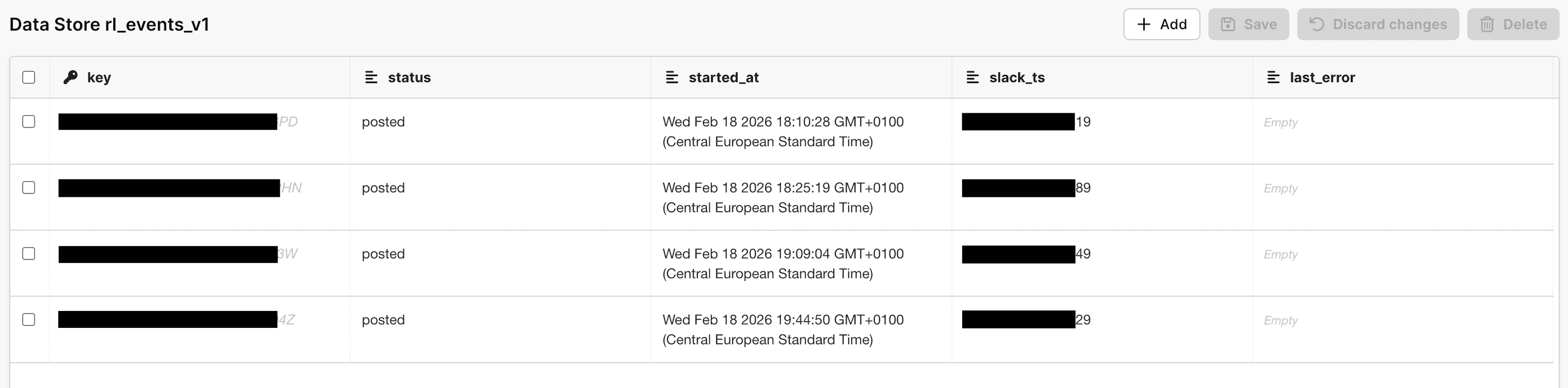
If you cannot trace conflicts by key and resolution path, you cannot control recurrence.
Prevention controls: reduce conflict frequency before runtime
Conflict handlers keep pipelines alive, but prevention lowers operational load.
Source-level controls
- Ensure webhook sender acknowledges correctly and quickly.
- Add delivery dedupe key at source if platform supports it.
- Prevent duplicate form submissions where appropriate.
Event-level controls
- Generate stable idempotency key from source payload.
- Reject duplicate key early before contact write.
- Separate "already completed" from "in-progress" events.
Write-level controls
- Use one canonical write path per object class.
- Avoid parallel create paths for same contact key.
- Enforce normalized key handling (email case, trim).
Ops-level controls
- Track 409 rate by source lane.
- Alert on conflict spikes per hour.
- Run weekly review of unresolved conflicts with owner.
For a full preventive model, review HubSpot workflow audit: 7 silent failures and HubSpot + Typeform reliability setup.
Implementation blueprint: production-safe create-or-update lane
Use this sequence in Make.com:
- Ingest webhook and assign
processing_id. - Lookup state ledger by
processing_id. - If completed -> skip duplicate.
- If new -> perform contact lookup by unique key.
- If found -> update.
- If not found -> create.
- On 409 from create -> resolve ID and update.
- Persist final state and execution trace.
- On unhandled error -> failed state + alert channel.
This blueprint aligns with three mandatory production goals:
- no silent drop of latest payload,
- no duplicate create side effects,
- no unresolved conflict without ownership.
Operational metrics to monitor after rollout
Once handler is live, monitor these metrics for 2 to 3 weeks:
| Metric | Why it matters | Target trend |
|---|---|---|
| 409 rate per 1,000 writes | direct signal of upstream duplication | decreasing |
| resolved-after-409 rate | confirms fallback effectiveness | stable then decreasing |
| unresolved conflict queue size | indicates manual burden | near zero |
| replay attempts per conflict key | detects runbook misuse | near zero |
| contact update latency | ensures conflict handling does not stall | stable |
If 409 rate stays high while resolution works, do not stop at runtime patching. You have an upstream event quality issue that needs source-side dedupe and acknowledgment controls.
FAQ
Is hubspot api 409 conflict an API failure or normal protection?
It is normal protection behavior from HubSpot. The API blocks duplicate creates to preserve uniqueness. In operations, frequent conflicts indicate weak upstream write logic, not random platform instability.
Why do I still get 409 after search-then-create in Make.com?
Search and create are separate operations. Between them, another lane can create the same record, or indexing lag can hide a recent create briefly. Add a 409 fallback update branch always.
Can I ignore 409 if the contact already exists anyway?
No. Ignoring conflict often means latest payload fields were never applied. You keep stale lifecycle and enrichment values, which corrupts reporting and downstream segmentation decisions.
How do I handle hubspot batch upsert 409 instead of 207 responses?
Treat batch responses as conflict-prone outcomes, not guaranteed multi-status detail. Split failed rows, apply per-row conflict routing, and log each row state so replay is deterministic and auditable.
Does native upsert remove the need for state tracking?
No. Upsert reduces create conflicts but does not replace event-level state. You still need traceability, retry safety, and ownership for non-conflict failures in the same workflow.
Next steps
- Get the free 12-point reliability checklist
- Review Make.com duplicate prevention guide
- Review Make.com Data Store as state machine
- Review Make.com retry logic without duplicates
- Review HubSpot + Typeform reliability setup
- See HubSpot workflow automation service
- See Make.com error handling service
- If you want direct incident triage and rollout, use Contact
Cluster path
Make.com, Retries, and Idempotency
Implementation notes for retry-safe HubSpot-connected flows: Make.com, state, monitoring, and replay control.
Related guides
Continue with these articles to close adjacent reliability gaps in the same stack.
March 8, 2026
Why HubSpot API Creates Duplicate Companies in Production
why hubspot api creates duplicate companies: HubSpot does not deduplicate API-created companies by domain. This guide shows safe upsert and retry controls.
March 9, 2026
HubSpot Contact Creation Webhooks: Stop Duplicate Contacts
HubSpot contact creation webhooks can fire multiple create and property-change events in Make.com. Learn burst control, dedupe keys, and safe contact writes.
March 8, 2026
Typeform, HubSpot, Slack: Where Duplicate Writes Start
typeform hubspot slack duplicate writes usually start upstream in Make.com branch order. This guide maps retries, event keys, and alert side effects.
Free checklist: Stripe Connect Ops Checklist
Get the PDF after submission. Use it to run through payout, verification, and triage checks when connected account behavior breaks in production.
Free 30-minute discovery call available after review. Paid reliability audit from €500 if fit is confirmed.
Need reliability work in production?
Book a scoping call. I map the highest-risk lane and confirm fit before a paid audit. Start with a free 30-minute audit-scoping call. Paid reliability audit starts from €500 if fit is confirmed.