
Form-to-CRM intake that stopped duplicate contacts
A B2B SaaS form-to-CRM workflow that eliminated duplicate HubSpot contacts, exposed failures fast, removed cleanup overhead, and kept retries safe with clear ownership.
Context
B2B SaaS lead intake flow where Typeform submissions feed HubSpot and sales follow-up depends on clean, timely contact creation.
Problem
Webhook retries and partial failures produced duplicate contacts and hidden data loss in HubSpot.
Outcome
Zero duplicate contacts in normal operation, full visibility of failed records, and safe reruns after interruption.
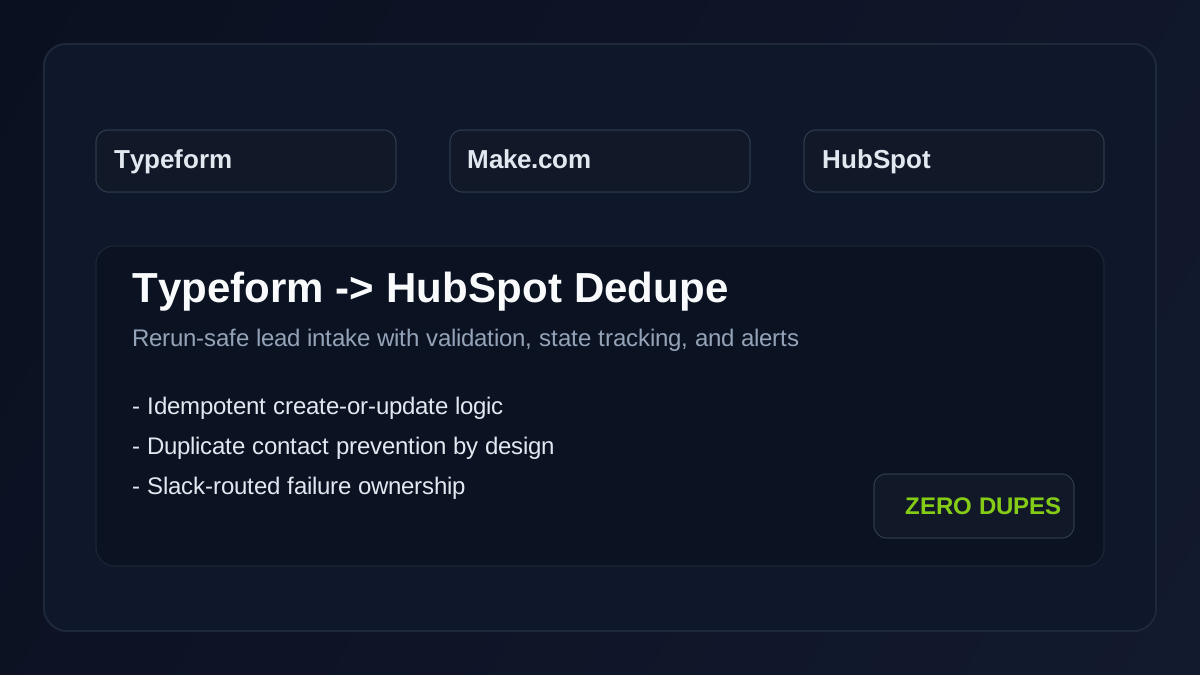
Services delivered
- Make.com workflow architecture
- HubSpot deduplication logic
- Error routing and alerting
- Runbook and incident handling model
Problem
This workflow looked simple on paper: a user submits a Typeform, the record lands in HubSpot, and sales gets a clean contact to work with.
In production, it broke in the same ways most form-to-CRM flows break:
- webhook retry events created duplicate contacts,
- partial write failures left orphaned state,
- field-level issues were silently ignored,
- and no one had a reliable way to tell what had succeeded versus failed.
The business impact was not dramatic in one incident, but expensive over time. Duplicates polluted lifecycle reporting, owners were assigned twice, and manual cleanup started consuming the same team hours automation was supposed to save.
The biggest issue was operational trust. Sales and RevOps could not answer basic questions quickly:
- Did this submission already get processed?
- Was this record updated or newly created?
- If it failed, who owns it now and when was it alerted?
When those questions require manual investigation, automation becomes another hidden queue instead of a leverage system.
What I Built
I implemented a Make.com workflow with a reliability layer around the Typeform to HubSpot path. The goal was not just to move data. The goal was to make reruns safe, duplicates impossible under normal conditions, and failures visible with ownership.
Deduplication
Each submission is normalized and mapped to a dedupe key based on email (with fallback rules for edge cases where email quality is uncertain).
Before any create action:
- check existing HubSpot contact by canonical email,
- check execution state in Data Store,
- branch to update-or-create logic with consistent conflict handling.
That makes the workflow idempotent for repeated delivery of the same business event. If Typeform or Make retries, state checks prevent duplicate contact creation.
State tracking
Every processed submission gets lifecycle state so the flow is rerun-safe:
new-> received and accepted for processing,processing-> active pipeline execution,processed-> HubSpot action complete,failed-> blocked with error class and reason code.
This state model is the backbone of safe recovery. If an interruption happens midway, rerun starts from known state instead of replaying blindly.
Validation gates
The scenario blocks bad payloads before CRM write actions. Required fields are enforced and malformed submissions are quarantined.
Typical gates include:
- missing or invalid email,
- required attribution field absent,
- impossible value patterns for routing fields,
- payload shape mismatch after form change.
Rejected records are not discarded. They are moved into an exception path with clear reason tags for fast triage.
Failure routing and alerts
No silent failures. If a branch fails:
- reason code is logged to state store,
- Slack alert is sent with submission context,
- and the record remains marked for retry.
This reduces detection time from "someone noticed later" to near real-time. It also prevents ownership ambiguity during handoff between RevOps and sales operations.
Auditability
Every submission produces a traceable record with timestamped status transitions. That gives teams run-level evidence during incident review and simplifies process audits.
Result
After rollout, the workflow moved from fragile convenience to production-safe intake.
Observed operational outcomes:
- duplicate contact incidents were eliminated in normal retry scenarios,
- failed submissions became visible immediately through alerts,
- reruns after interruptions were safe and predictable,
- and cleanup effort was replaced by exception-first handling.
The most valuable change was reliability confidence. Teams could now answer "what happened to this lead" with system evidence instead of cross-tool guesswork.
Reliability Controls
| Control | Implementation |
|---|---|
| Idempotency | Dedupe key plus state check before write |
| Validation | Required-field gates and payload sanity checks |
| Error routing | Failed path to Slack alert and reason log |
| Audit trail | Status, timestamps, and error class per record |
| Rerun safety | State-based branching prevents double processing |
Stack
- Make.com
- Typeform
- HubSpot
- Slack
- Data Store
Operational handoff checklist
Handoff included an operator checklist for weekly health review: monitor failed-state backlog, sample dedupe decisions, verify alert ownership, and test one controlled replay path. This kept reliability controls active after launch instead of degrading into one-time setup.
Related references
For implementation scope and delivery model on this exact problem set, see HubSpot workflow automation service.
If your scenario risk is concentrated in retry behavior and hidden failures, see Make.com error handling.
For another production case on reliability controls in finance workflows, see VAT filing automation with zero rejected submissions.
For the larger context on failure modes behind "smart" systems, read Why 70% of AI agents fail in production.
If you want the exact delivery model used for these implementations, see How It Works.
Your form-to-CRM workflow dropping records or creating duplicates? Book a free 30-minute discovery call. If fit is confirmed, paid reliability audit starts from €500. I will map failure points and scope a fix.