
Meeting Brief Automation: Fireflies to Slack, Retry-Safe Delivery
Automated meeting brief delivery from Fireflies to Slack with idempotent processing, validation, and owner-routed failure handling for reliable post-call execution.
Context
B2B SaaS operations flow where customer and internal meeting transcripts needed consistent, action-oriented briefs in team Slack channels within minutes.
Problem
Meeting briefs were delayed, inconsistent, or missing because transcript processing relied on manual steps and non-deterministic retries.
Outcome
Teams received predictable, high-signal briefs in Slack with replay-safe processing and immediate visibility for failed deliveries.
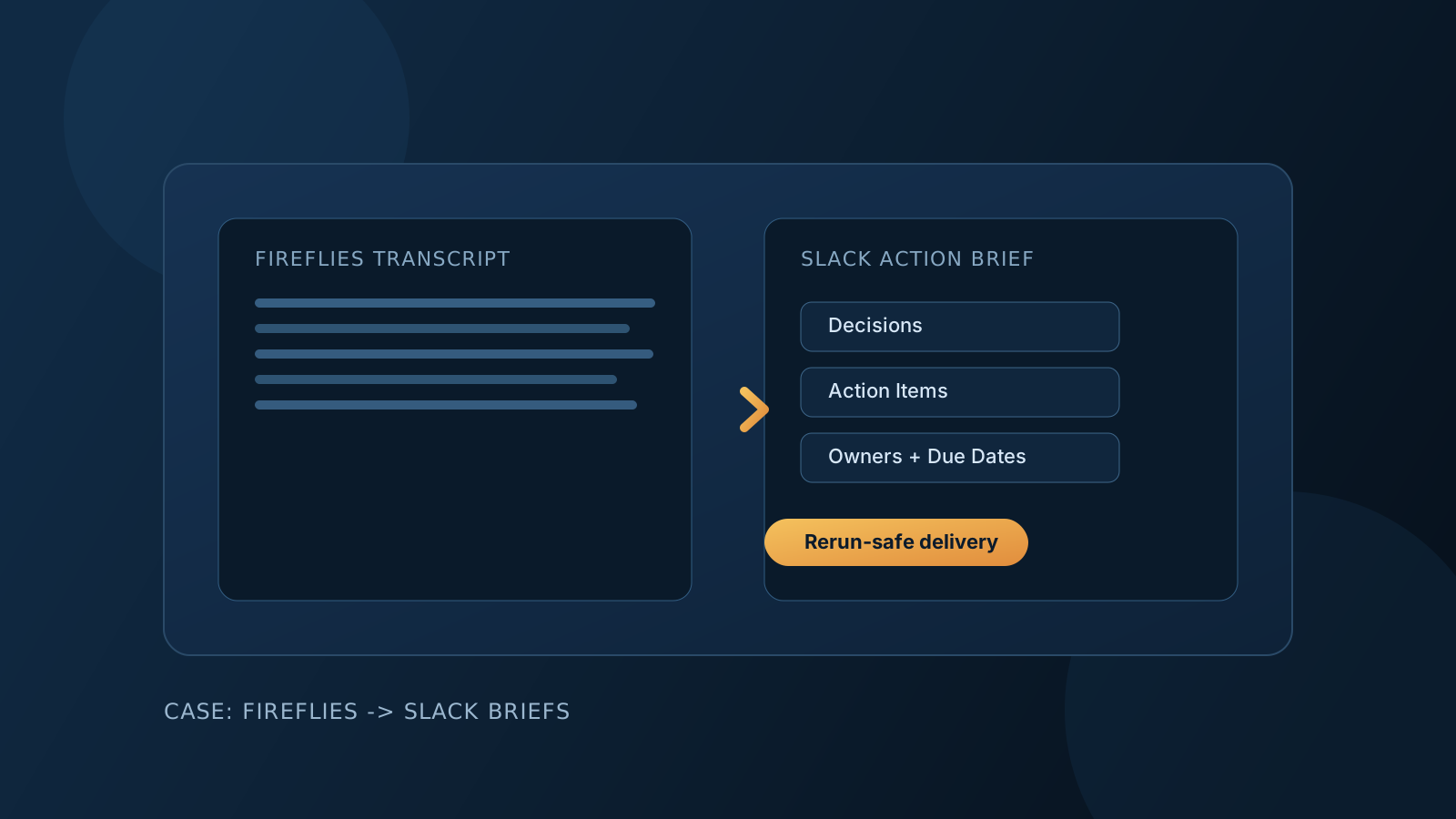
Services delivered
- Transcript-to-brief workflow architecture
- Idempotent delivery controls
- Validation and exception routing
- Runbook and handoff documentation
Problem
This case started as a familiar post-meeting operations issue: everyone wanted structured action summaries in Slack, but delivery quality depended on manual follow-up.
The intended workflow looked simple:
- meeting transcript becomes available,
- summary is generated,
- brief is posted to a team channel,
- owners follow up on action items.
In practice, the flow broke in multiple ways:
- transcript events arrived out of order or retried,
- some meetings produced partial or low-signal summaries,
- Slack delivery failed silently on intermittent API issues,
- and there was no reliable status model for replay.
The business problem was not "we need AI summaries." The real problem was reliability and accountability:
- operators could not confirm whether a brief was already posted,
- teams could not trust that high-priority calls always produced a usable output,
- and missing briefs were usually discovered hours later by chance.
For RevOps and Customer Success teams, this caused execution drift. Follow-ups happened late, context got lost between teams, and meeting insights were inconsistent across accounts.
What I Built
The implementation used Fireflies + Make.com + Slack with a reliability layer around every critical step.
1) Deterministic event identity
Each transcript event was normalized to an idempotency key before any generation or posting action.
Key design combined stable meeting identifiers with source metadata so duplicate deliveries could be recognized safely.
Result: retries from source systems no longer created duplicate Slack briefs.
2) State-driven processing model
Every event was persisted with explicit workflow state:
receivedprocessingbrief_generatedpostedfailed
This made replay deterministic. If processing stopped after brief generation but before Slack posting, rerun resumed from known state instead of regenerating everything blindly.
3) Validation before publish
Generated output passed validation gates before Slack write:
- required sections present (context, decisions, actions),
- action items had clear owner/time references,
- payload length and format checks for channel readability.
If output failed validation, the record moved to an exception lane with reason code. That prevented low-quality briefs from polluting team channels.
4) Owner-routed failure handling
Failures were never silent:
- reason class logged,
- alert sent to owner channel,
- incident remained open until explicit resolution.
This turned "we noticed missing briefs later" into immediate operational visibility.
5) Controlled prompt and template versioning
Prompt and formatting templates were versioned with run metadata. This provided two advantages:
- output behavior stayed stable across workflow updates,
- teams could trace quality changes to explicit template versions.
Versioning was critical for keeping summary style consistent as requirements evolved.
Result
After rollout, post-meeting briefing moved from best-effort to predictable execution.
Observed outcomes:
- briefs arrived consistently in target Slack channels,
- duplicate posting risk from retries was removed in normal operation,
- failed deliveries surfaced immediately with ownership,
- and replay became safe and auditable.
The non-obvious win was decision velocity. Teams spent less time reconstructing meeting context and more time executing next actions with shared visibility.
This matters because reliability in communication workflows compounds: when one missed brief causes one missed follow-up, customer and revenue risk usually appears downstream, not at the moment of failure.
Reliability controls
| Control | Implementation |
|---|---|
| Idempotency | Meeting-level key check before generation/posting |
| State tracking | received -> processing -> brief_generated -> posted/failed |
| Validation | Required summary structure and action-item quality gates |
| Error routing | Owner-alerted exception flow with reason codes |
| Replay safety | Resume from known state, not full blind rerun |
| Version traceability | Prompt/template version captured in run metadata |
Operational KPI snapshot used after rollout
To confirm this flow stayed stable, the team tracked a small weekly KPI set:
- posted-brief success rate by meeting type,
- duplicate-prevented event count,
- median time from transcript-ready to Slack post,
- unresolved exception age by owner lane.
This made reliability discussions objective and reduced "it feels fine" decision-making.
Implementation notes
This case is a good pattern for teams building AI-assisted operational workflows in no-code/low-code stacks. The model is reusable beyond meeting summaries:
- customer call enrichment,
- onboarding handoff digests,
- incident recap routing,
- and weekly account review automation.
The key design principle is constant: generation quality matters, but reliability controls determine whether outputs stay trustworthy in production.
For deeper implementation specifics on failure handling in this stack, see HubSpot + Make.com Error Handling.
If your core issue is fragile branch behavior and retries, this scope aligns with Make.com Error Handling service.
Delivery model details are on How It Works (audit -> pilot -> production handoff).
If you want to map this pattern to your own workflow lanes, book a free 30-minute discovery call. If fit is confirmed, paid reliability audit starts from €500.
Confidentiality note
This case is presented with anonymized context and implementation details suitable for public publication while preserving the technical control model and production reliability outcomes.